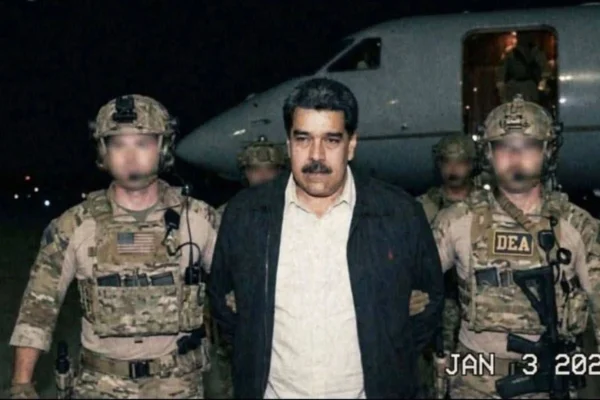
Washington / Caracas — The United States has projected itself as a global enforcer of law and order following the dramatic arrest of Venezuelan President Nicolás Maduro, a move that has reignited debates over American power, international law, and political double standards. While U.S. officials describe the action as a victory for justice and democracy, critics argue that Washington is behaving like the “ultimate global goon,” acting unilaterally and beyond accepted international norms.
According to U.S. authorities, the arrest is tied to long-standing charges against the Venezuelan leader, including drug trafficking, corruption, and human rights abuses. American officials insist the move was necessary to protect regional stability and hold authoritarian leaders accountable. “No one is above the law,” a senior U.S. official stated, emphasizing that the arrest reflects America’s commitment to democracy and rule of law.
However, the move has triggered sharp backlash from Latin American leaders, international legal experts, and global observers. Many argue that the United States lacks the legal authority to detain a sitting head of state of a sovereign nation without international consensus or a clear United Nations mandate. Critics say this reinforces a long-standing perception that Washington applies international law selectively strictly against rivals, but leniently toward allies.
Venezuela’s government has condemned the arrest as an act of “imperialist aggression,” calling it a violation of national sovereignty and international law. Protests erupted in Caracas, where supporters of the president accused the U.S. of attempting regime change under the guise of justice.
The incident has also revived memories of past U.S. interventions in countries like Iraq, Libya, and Panama, where Washington justified its actions as necessary for global security. For critics, the arrest of Venezuela’s president fits a familiar pattern: the U.S. positioning itself as judge, jury, and enforcer on the world stage.
As global reactions continue to pour in, the episode raises a deeper question does enforcing accountability justify bypassing international norms, or does it further entrench the image of the United States as a self-appointed global enforcer? For now, Washington appears confident in its stance, but the debate over power, legality, and morality is far from settled.
Related Articles
How the Arrest of Venezuela’s President Could Reshape Latin American Politics
Is the United States Acting as a Global Enforcer or Defender of Democracy?