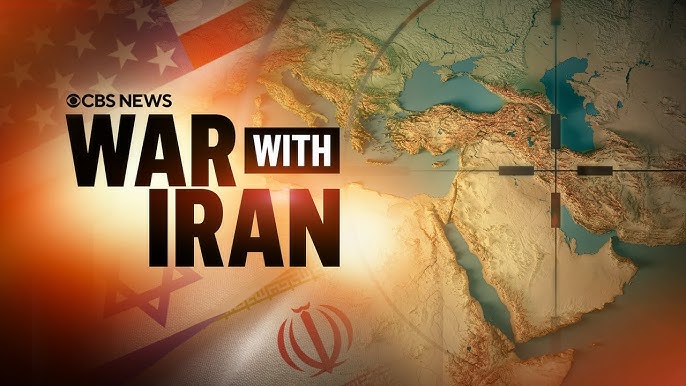
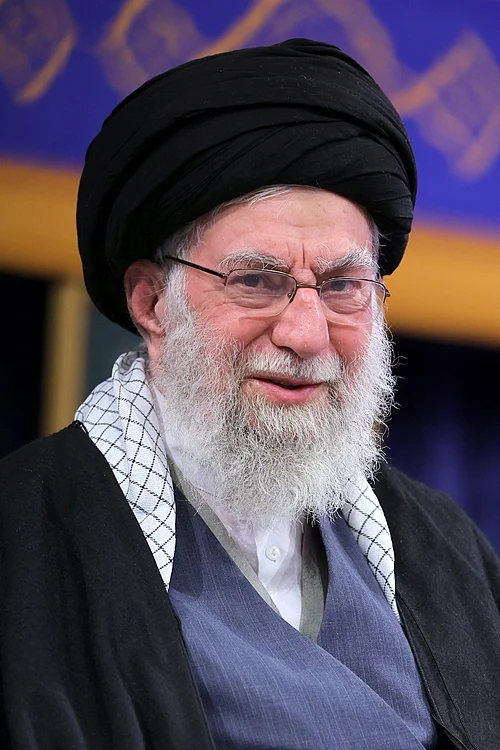
The reported killing of Ayatollah Ali Khamenei, the Supreme Leader of Iran, in a coordinated military operation attributed to Israel and the United States represents a watershed moment in modern geopolitical history. Such an action targeting the highest authority of a sovereign state would not occur without deep strategic calculation. This case study analyzes the structural, military, ideological, and geopolitical drivers that could explain such a decision.
The Strategic Position of the Supreme Leader in Iran’s Power Structur
To understand the rationale behind the strike, one must first understand the centrality of the Supreme Leader within Iran’s political architecture.
Unlike presidents or prime ministers in most systems, the Supreme Leader holds ultimate authority over:
- The armed forces and military doctrine
- Intelligence and security services
- Strategic foreign policy decisions
- The judiciary and constitutional oversight
Khamenei was not merely a symbolic religious figure; he was the central node of Iran’s decision-making ecosystem. Any attempt to fundamentally alter Iran’s strategic posture would necessarily involve confronting this concentration of authority.
Long-Term Strategic Rivalry
The confrontation did not emerge suddenly. It was the culmination of decades of escalating hostility rooted in incompatible security doctrines.
Nuclear Deterrence Calculus
For years, Washington and Tel Aviv viewed Iran’s nuclear enrichment activities as crossing critical thresholds that could enable weaponization. Even absent confirmed weapon production, the perception of “latent capability” significantly altered regional deterrence dynamics.
From a strategic perspective, once a state approaches nuclear breakout capacity, preventive action becomes increasingly attractive to adversaries who perceive existential risk. Decision-makers may calculate that acting before full weaponization carries lower long-term costs than confronting a nuclear-armed opponent.
Missile and Asymmetric Warfare Expansion
Iran’s rapid development of ballistic missiles, cruise missiles, and drone warfare systems expanded its ability to project power indirectly. These capabilities strengthened allied non-state actors and increased pressure on regional adversaries.
For Israeli defense planners, the threat was not merely conventional warfare but the possibility of coordinated multi-front pressure. For U.S. strategists, it raised concerns about force protection and regional stability.
Neutralizing the architect of this doctrine would theoretically disrupt its operational coherence.
Decapitation Strategy: Military Logic
The reported strike aligns with a doctrine known as leadership decapitation—the targeted removal of a state’s highest authority to achieve strategic paralysis.
Such operations are designed to:
- Disrupt centralized command-and-control systems
- Slow retaliation coordination
- Trigger internal succession struggles
- Create strategic uncertainty
In highly centralized systems, leadership removal can produce disproportionate disruption compared to targeting conventional military assets alone. If planners believed Iran’s strategic coherence was heavily dependent on Khamenei’s authority, the logic of decapitation becomes clearer.
Ideological Dimensions
The confrontation was not purely military; it was deeply ideological.
Khamenei represented a doctrine that framed both Israel and the United States as structural adversaries. His leadership reinforced a worldview built around resistance, strategic patience, and regional influence expansion.
Removing such a figure carries symbolic weight. It signals not only tactical capability but also a challenge to the ideological foundation of the regime.
Symbolism in geopolitics often matters as much as battlefield metrics.
Domestic Political Calculations
Strategic decisions of this magnitude are rarely divorced from internal political dynamics.
For policymakers in Washington, demonstrating resolve against perceived long-term threats can reinforce deterrence credibility. For Israeli leadership, preemptive action aligns with long-standing national security doctrine emphasizing survival through forward defense.
When leaders assess that delaying action increases future risk, bold decisions become more likely—especially if intelligence suggests narrowing windows of opportunity.
Risk Assessment and Escalation Management
Targeting the head of state of a regional power carries enormous escalation risk. Therefore, planners would have evaluated several critical variables:
- Iran’s immediate retaliation capability
- The cohesion of allied regional actors
- The potential for global economic disruption
- Diplomatic fallout with major powers
If the operation proceeded, it likely reflected a calculation that escalation could be contained—or that the long-term strategic benefit outweighed short-term volatility.
Regional and Global Consequences
The immediate aftermath would predictably include:
- Elevated military alert across the Middle East
- Proxy retaliation risks
- Oil market volatility
- Diplomatic realignments
More profoundly, the removal of a long-standing Supreme Leader could trigger shifts within Iran’s elite power networks. Leadership transitions in centralized systems often open periods of recalibration, whether toward consolidation or reform.
The long-term outcome depends on how successor structures stabilize authority.
Strategic Summary
The reported killing of Ayatollah Ali Khamenei can be analyzed through five interlocking strategic lenses:
- Nuclear deterrence prevention
- Disruption of centralized command authority
- Containment of regional asymmetric expansion
- Symbolic dismantling of ideological leadership
- Preemptive risk management
Whether viewed as preventive defense or destabilizing escalation, the operation represents a decisive attempt to alter the strategic trajectory of a decades-long confrontation.
Conclusion
This event underscores a central principle of geopolitics: when rival powers perceive existential threat combined with narrowing strategic timelines, they may choose bold and unprecedented action.
The long-term consequences will not be measured solely in military outcomes, but in shifts in deterrence architecture, regional alliances, and the internal evolution of Iran’s political system.
History will ultimately judge whether the strike reduced instability or accelerated it.
Read Related Posts