Executive Summary
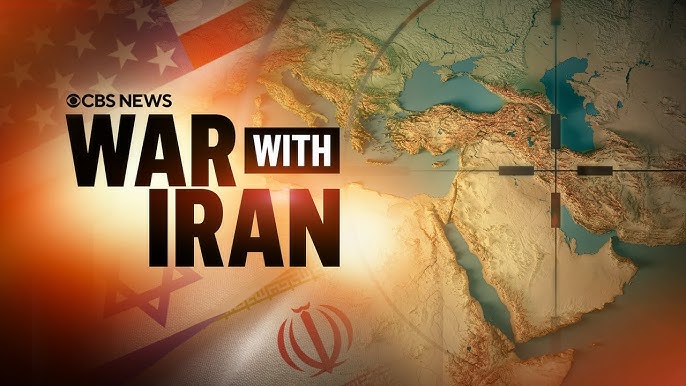
On February 28, 2026, the United States and Israel launched a coordinated joint military operation against Iran marking one of the most consequential unilateral Western military actions in the Middle East since the 2003 invasion of Iraq. The operation, codenamed ‘Roaring Lion’ by the Israeli Defense Forces and ‘Operation Epic Fury’ by the United States, targeted Iran’s nuclear infrastructure, military command chains, and senior leadership.
The attack resulted in the death of Supreme Leader Ayatollah Ali Khamenei, a development that had no modern precedent in international relations. This case study examines the strategic, political, and historical factors that led to this escalation, and analyses its broader implications for regional and global security
Historical Background
To understand why this operation took place, it is essential to examine the decade-long trajectory of Iran’s nuclear programme and its role as a regional power broker through proxy forces across the Middle East.
2.1 Iran’s Nuclear Ambitions and International Pressure
Iran’s nuclear programme, which Tehran has long maintained is intended for civilian energy purposes, has been a source of deep international concern since the early 2000s. Multiple rounds of sanctions, the 2015 Joint Comprehensive Plan of Action (JCPOA), and successive diplomatic efforts failed to produce a permanent resolution.
By 2025, Iran had enriched uranium to near-weapons-grade levels, dramatically reducing the theoretical time required to produce a nuclear weapon a threshold that Israeli and American intelligence communities referred to as an unacceptable ‘breakout’ scenario.
2.2 The Axis of Resistance and Its Collapse
Iran’s strategic influence in the region was exercised largely through a network of non-state armed groups collectively known as the ‘Axis of Resistance,’ which included Hamas in Gaza, Hezbollah in Lebanon, the Houthis in Yemen, and various militias in Iraq and Syria. Following the Hamas-led attacks on Israeli territory on October 7, 2023, Israel embarked on a sustained campaign that, by mid-2025, had significantly degraded each of these organisations. The neutralisation of Iran’s proxy network removed a key layer of deterrence that had previously constrained direct military confrontation.
2.3 The Twelve-Day War of 2025
In mid-2025, Israel and Iran engaged in a direct exchange of military strikes a brief but intense conflict that became known as the ‘Twelve-Day War.’ During this period, the United States conducted limited strikes on Iranian nuclear facilities.
Suggested Read: Why Did Israel and the USA Kill Ayatollah Ali Khamenei?
While the conflict ended without a full-scale war, it left Iran’s military infrastructure weakened, its economy under severe pressure from international sanctions, and its population increasingly restive. The 2025 confrontation served as both a rehearsal and a strategic precedent for the February 2026 operation.
2.4 Domestic Crisis in Iran
By late 2025, Iran was experiencing its most severe internal crisis since the 1979 Islamic Revolution. A collapsed national currency, widespread unemployment, and the cumulative effects of years of international isolation had triggered mass protests across more than one hundred cities. The Iranian government’s violent suppression of demonstrations resulting in thousands of civilian casualties drew sharp international condemnation and emboldened foreign policymakers who advocated for regime change. This internal vulnerability was a critical factor in the timing of the 2026 military operation.
3. Immediate Causes of the Operation
3.1 Collapse of Nuclear Negotiations
In January and February 2026, the United States and Iran were engaged in indirect nuclear talks mediated by the Sultanate of Oman. A second round of negotiations was scheduled to take place in Geneva, and early reports indicated that Iranian negotiators had tentatively agreed to conditions including zero uranium stockpiling and full inspections by the International Atomic Energy Agency (IAEA). However, these diplomatic signals were not sufficient to satisfy American and Israeli policymakers, who questioned whether Iran would honour any agreement given its track record of non-compliance with previous accords. The Trump administration ultimately concluded that negotiations would not produce a durable resolution.
3.2 Intelligence Assessments on Nuclear Breakout
Both American and Israeli intelligence agencies assessed that Iran had reached or was approaching a critical threshold in its nuclear development the point at which the production of a functional nuclear weapon could occur within weeks rather than months. For Israel, a nuclear-armed Iran represented an existential threat. President Trump publicly stated that military action had been taken after Iran had rejected ‘every opportunity to renounce its nuclear ambitions,’ framing the operation as a last resort following the exhaustion of diplomatic options.
3.3 The Purim Timing
The decision to launch the operation on February 28, 2026 on the eve of the Jewish festival of Purim, which falls on March 2 was widely noted by analysts as symbolically deliberate. Purim commemorates the ancient Jewish community’s deliverance from a Persian adversary, as recorded in the Hebrew Bible’s Book of Esther. The choice of this date carried profound cultural and political resonance, particularly given that modern Iran is the successor state to the Persian Empire. Whether or not the timing was operationally determined by symbolic considerations, it had significant implications for how the attack was perceived both domestically within Israel and internationally.
3.4 Decapitation of Iranian Leadership
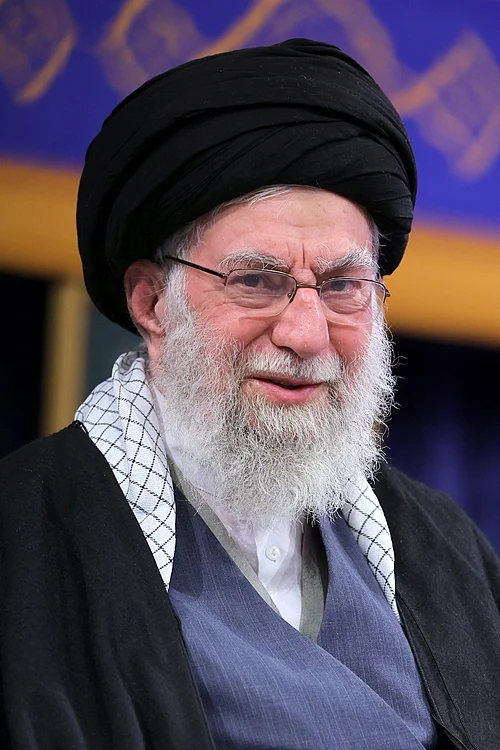
Among the most extraordinary outcomes of the operation was the killing of Supreme Leader Ayatollah Ali Khamenei, who had led the Islamic Republic since 1989. His death was confirmed by both President Trump and Iranian state media. The targeting of a head of state even a non-elected theocratic leader represented a dramatic and historically unprecedented act that fundamentally altered the political landscape of the region.
4. Military Objectives and Targets
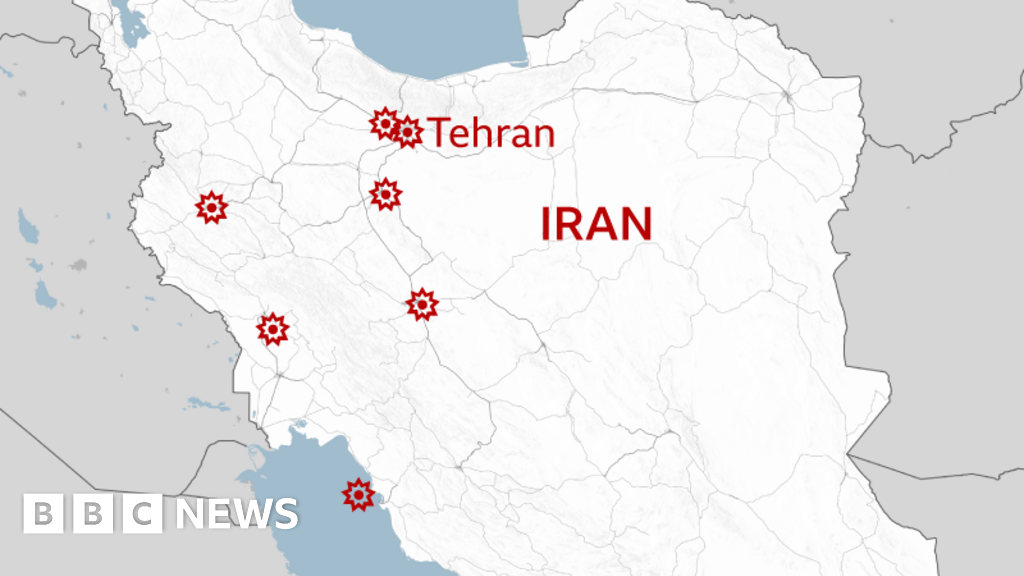
The joint operation was comprehensive in its scope, targeting multiple categories of Iranian assets simultaneously. Primary targets included Iran’s nuclear research and enrichment facilities, particularly those located in Isfahan, Natanz, Fordow, and Arak. Secondary targets encompassed senior commanders of the Islamic Revolutionary Guard Corps (IRGC) and other military leadership figures. Strikes were reported in the cities of Tehran, Isfahan, Qom, Karaj, Kermanshah, Tabriz, Bushehr, Shiraz, and Urmia.
The strategic logic behind the simultaneous targeting of nuclear infrastructure and military command structures was to prevent Iran from mounting an organised and effective retaliation while also eliminating the institutions most capable of reconstituting its nuclear programme in the immediate aftermath of the strikes.
5. Regional Consequences and Reactions
5.1 Iranian Retaliation
Iran responded swiftly by launching ballistic missile and drone attacks against twenty-seven military installations hosting United States troops across the Middle East, as well as against Israeli military facilities. Iran declared a forty-day period of national mourning. Missile strikes also targeted American military assets stationed in the United Arab Emirates, Qatar, Kuwait, Bahrain, and Saudi Arabia — drawing these Gulf states into the conflict despite none of them having participated in the original operation.
5.2 International Response
The international response was broadly critical of the operation, particularly among European nations. The European Union called for maximum restraint from all parties and expressed concern that military action had been taken while diplomatic negotiations were still ongoing.
Significant anger was directed at Washington by Gulf state governments, whose territories became targets for Iranian retaliation as a consequence of hosting American military forces. Russia and China condemned the strikes as violations of international law and sovereignty. Within the United Nations Security Council, emergency sessions were convened, though vetoes from permanent members prevented the passage of binding resolutions.
5.3 Domestic Reception in Israel and the United States
In Israel, the operation was greeted with significant public support, though opposition political figures raised questions about the legal and ethical basis for the strikes and the adequacy of parliamentary oversight.
Prime Minister Netanyahu, facing a general election scheduled for October 2026, was assessed by political analysts to have used the operation, at least in part, to consolidate domestic political support. In the United States, the operation divided public opinion along partisan lines, with supporters framing it as a decisive act to prevent nuclear proliferation and critics questioning its legality under international law and the potential for uncontrolled escalation.
6. Strategic Analysis
6.1 The Logic of Preventive War
The U.S.–Israel operation fits within the established doctrine of preventive warfare the use of military force to neutralise a perceived threat before it fully materialises. This doctrine is legally and morally contested. Proponents argue that in the case of nuclear proliferation, the catastrophic potential of the threat justifies pre-emptive action.
Critics argue that preventive strikes violate the prohibition on the use of force enshrined in the United Nations Charter and set dangerous precedents for international relations.
6.2 A Strategic Window
The timing of the operation reflects a calculated assessment of strategic opportunity. Iran’s proxy network had been dismantled, its economy was in freefall, its population was in open revolt, and its military had been tested and found wanting in the 2025 exchanges.
From the perspective of Israeli and American planners, such a convergence of favourable conditions was unlikely to recur. The operation thus represents a classic example of states acting within what strategists term a ‘window of opportunity’ a narrow and potentially closing period during which the costs and risks of military action are judged to be relatively lower than at any other time.
6.3 Long-Term Uncertainties
Despite the immediate military success of the operation in degrading Iran’s nuclear infrastructure and eliminating its senior leadership, significant long-term uncertainties remain. The death of Khamenei has created a succession crisis within Iran’s theocratic system. It remains unclear whether the Revolutionary
Guards or civilian political institutions will consolidate power, whether a successor leader will pursue a more moderate or more radical foreign policy, and whether the destruction of nuclear facilities will permanently foreclose Iran’s nuclear ambitions or merely delay them.
Historical analogies including Israel’s 1981 strike on Iraq’s Osirak reactor, which ultimately did not prevent Iraq from pursuing a reconstituted weapons programme counsel caution about the durability of military solutions to nuclear proliferation.
Was the U.S.–Israel strike on Iran legal under international law?
A: This is one of the most contested dimensions of the operation. Under the United Nations Charter, the use of force against another sovereign state is prohibited except in cases of self-defence under Article 51 or with authorisation from the Security Council. The United States and Israel have justified the strikes under the doctrine of anticipatory self-defence, arguing that an imminent nuclear threat constituted grounds for military action. International legal scholars are divided, and the debate is likely to continue in international forums for years.
What was the significance of Supreme Leader Khamenei being killed?
A: The killing of Ayatollah Khamenei was historically unprecedented. He had been the supreme authority in Iran since 1989 and was the central figure holding together the Islamic Republic’s governing structures. His death created an immediate succession crisis and raised fundamental questions about the future of Iran’s political system, including whether power would shift toward the IRGC, the Assembly of Experts, or produce a period of internal conflict.
Why did Iran retaliate against Gulf states that did not participate in the strike?
A: Iran targeted American military installations located in the UAE, Qatar, Kuwait, Bahrain, and Saudi Arabia because these countries host U.S. forces whose infrastructure was used to support or enable the operation. From Iran’s strategic perspective, states that host hostile military forces are considered complicit in attacks launched from their territory. This significantly widened the conflict and strained Iran’s relationships with its immediate neighbours.
Could diplomacy still have worked in early 2026?
A: Reports from Omani mediators suggest that progress had been made in the Geneva talks, with Iran reportedly agreeing to conditions including zero uranium stockpiling and full IAEA access. Whether these agreements would have been honoured or successfully concluded is now a matter of historical speculation. The decision to proceed with the military operation rather than allow the negotiating process to conclude was, and remains, one of the most debated aspects of the affair.
How does this compare to Israel’s 1981 strike on Iraq’s Osirak reactor?
A: Israel’s Operation Opera in 1981 destroyed Iraq’s Osirak nuclear reactor in a surprise air strike. Like the 2026 operation, it was conducted without UN authorisation and justified as preventive self-defence. However, Iraq subsequently reconstituted and even expanded its nuclear weapons programme following the strike, which was only fully dismantled after the 1991 Gulf War. This historical precedent raises important questions about whether military strikes can permanently eliminate nuclear ambitions or merely defer them.